
Named after the Sahyadri mountain range of South India—part of the Western Ghats and one of the world’s recognized biodiversity hotspots—the award symbolizes resilience, growth, and scientific discovery.
The Sahyadri Award for Outstanding Plant Postdoc(s) recognizes exceptional postdoctoral researchers in plant science–related fields who are currently on the U.S. academic job market. Awardees receive an honorarium, present at the Sahyadri Symposium, and are paired with a faculty mentor who will provide guidance and support throughout the academic job search process.
Congratulations to all the Sahyadri Outstanding Award recipients on this well-deserved award!
2026 Award Recipients
Colin Kim

Biography
Dr. Colin Kim is an HHMI Hanna H. Gray Postdoctoral Fellow in Dr. Ryan Nett’s lab at Harvard University. He is currently leveraging single-nuclei RNA sequencing to understand how the South African succulent, Kanna, produces antidepressant mesembrine alkaloids. During his PhD with Dr. Jing-Ke Weng at MIT/Whitehead Institute, Colin investigated the genomic and structural basis for plant enzyme neofunctionalization. More broadly, he is fascinated by the rare chemistry and specialized biology that emerge through the evolution of plant metabolism.
Saroj Sah

Biography
Dr. Saroj Sah is a Research Associate at Brookhaven National Laboratory, where he studies plant lipid metabolism, carbon allocation, and metabolic engineering to improve oil accumulation in crops. His research focuses on understanding and engineering pathways that regulate fatty acid and triacylglycerol biosynthesis, with particular emphasis on Arabidopsis and Camelina. He is also interested in sugar signaling, plastid carbon metabolism, and synthetic biology approaches for developing higher-oil, more sustainable crops. Saroj is an active member of the plant science community and is passionate about research, mentoring, and scientific outreach.
Youngwoo Lee

Biography
Dr. Youngwoo Lee is a plant systems biologist interested in understanding how proteins assemble into functional molecular networks and how changes in their organization shape plant development and physiology. He earned his Ph.D. in Botany from Purdue University, where he developed proteomic and computational frameworks to understand protein complex organization and evolution in plants. As a postdoc, Youngwoo expanded this work to uncover dynamic proteome remodeling and systems-level regulatory networks underlying plant development and environmental responses. At Saint Louis University, Youngwoo now integrates proteomics and structural biology to characterize the interaction architecture of photosynthetic protein complexes. His research aims to understand how protein organization shapes cellular function and plant phenotypes.
2025 Award Recipients
Penelope Lindsay

Biography
(Awardee Profile)
Dr. Penelope Lindsay is a Research Associate in the Leiboff Lab at Oregon State University. She investigates the signaling mechanisms underlying maize meristem maintenance using a combination of protein biochemistry, cell biology, and genetics. From her work, she hopes to unravel how meristems are regulated to control maize ear size and shape. In addition to her research, Penelope is passionate about mentoring and community building between scientists and the general public.
Elena K. Perry
Biography
(Awardee Profile)
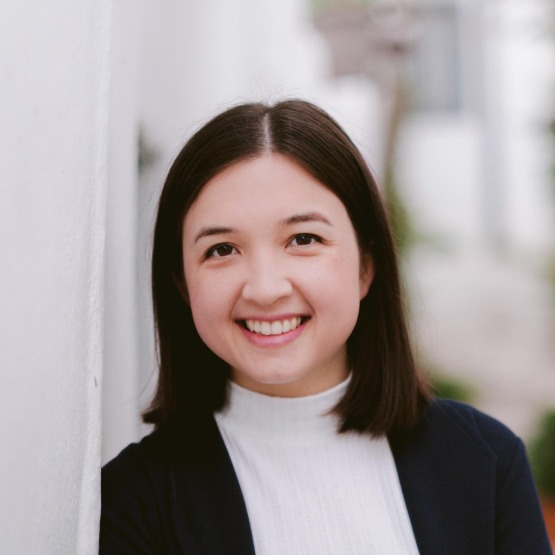
Dr. Elena K. Perry is a postdoctoral fellow in the Environmental Genomics and Systems Biology division at Lawrence Berkeley National Laboratory, where she is studying how native methane-eating bacteria influence the structure and function of the rice microbiome. Previously, she obtained her Ph.D. in biology at the California Institute of Technology, where she uncovered ecological and evolutionary effects of bacterially-produced natural antibiotics, followed by a postdoctoral fellowship at Genentech, Inc. Her work integrates reductionist and systems-level approaches to advance the understanding of microbial interspecies interactions, with the aim of facilitating microbiome engineering for sustainable applications in agriculture, health, and the environment.
Erica Lawrence-Paul
Biography
Career Update: As of Fall 2025, Dr. Lawrence-Paul has joined Pennsylvania State University (Penn State) as an Assistant Research Professor in the Department of Biology.
(Awardee Profile)
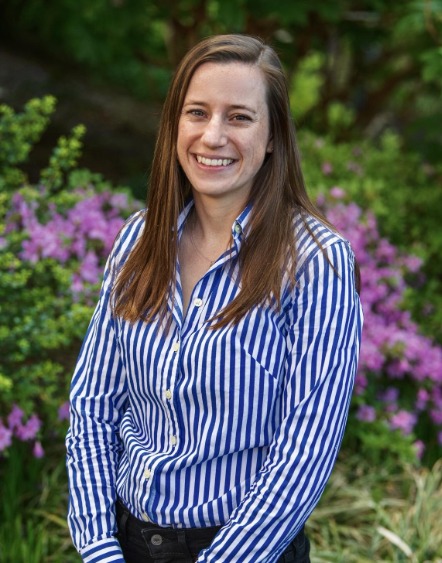
Dr. Erica Lawrence-Paul is a Postdoctoral Scholar at Pennsylvania State University working with Jesse Lasky. Her research examines how developmental transitions shape plant responses to the environment and contribute to local adaptation. She earned her PhD in Biology from the University of Pennsylvania working with Scott Poethig and Brent Helliker, where she studied the ecophysiological significance of vegetative phase change. Her work has been supported by both the NSF Graduate Research Fellowship and NSF Postdoctoral Research Fellowship. Erica plans to continue developing strategies to increase plant resilience to environmental stress and to inspire future generations to explore the exciting world of plant biology.
2024 Award Recipients
Sombir Rao

Biography
Career Update: As of August 2026, Dr. Rao has joined the University of Massachusetts – Amherst as an Assistant Professor in the Stockbridge School of Agriculture.
(Awardee Profile)
Dr. Sombir Rao received his PhD jointly from DBT-National Institute of Plant Genome Research (NIPGR) and Jawaharlal Nehru University in New Delhi, India. Sombir is interested in exploring the regulatory controls of carotenoid accumulation in plants and developing novel genetic strategies for the improvement of crops.
Renee Dale

Biography
Career Update: As of January 2024, Dr. Dale has joined Washington University in St. Louis as a Staff Scientists in the Department of Physics.
(Awardee Profile)
Dr. Renee Dale is a mathematical biologist and a National Science Foundation Postdoctoral Fellow at the Donald Danforth Plant Science Center. She uses experiments and mathematical modeling to study developmental processes across scales and understand the mechanisms underlying plasticity and adaptation in plants. She previously earned a PhD in mathematical biology studying the mathematical dynamics of enzyme kinetics, and an MS in statistics studying Bayesian statistics and population epidemiology from Louisiana State University. Dr. Dale is passionate about making mathematics more accessible to biologists, and engages in activities including workshops and developing educational tools, from simulators to video games.
Deepak Bhandari

Biography
(Awardee Profile)
Dr. Deepak D. Bhandari is currently a postdoctoral researcher in the Brandizzi lab at Michigan State University, where he focuses on plant-microbe interactions and the logistics of plant defense. His research aims to unravel plant defense trafficking pathways and immunity-driven cell wall remodeling. Prior to his postdoctoral appointment, Dr. Bhandari completed his PhD under the guidance of Prof. Jane Parker at the Max-Planck Institute for Plant Breeding Research, Germany, where he explored molecular mechanisms driving plant immunity. Dr. Bhandari’s expertise lies in understanding the logistics of plant defense at a cellular and molecular level, with a long-term goal of applying these insights to enhance agricultural resilience against pathogens. His contributions to the field include novel insights into plant immunity and stress responses, with a focus on how plants reprogram cellular logistics during pathogen attack.
2023 Award Recipients
Maryam Rahmati Ishka

Biography
Career Update: As of Fall 2025, Dr. Ishka has joined Eastern Illinois University as an Assistant Professor in the Department of Biological Sciences.
(Awardee Profile)
Dr. Maryam Rahmati Ishka is a Postdoctoral Researcher at Julkowska lab at Boyce Thompson Institute, where her research focus is on the plant architecture and stress resilience. Maryam received her Ph.D. from the University of Nevada, Reno, where she investigated the genetic components of calcium circuits in Arabidopsis vegetative and reproductive development at Harper lab. Maryam served two years as an Assistant Features Editor for The Plant Cell and as an Early Career Representative on the “Women in Plant Biology” committee of the ASPB. Maryam’s overarching goal is to enhance the accessibility of the field of plant science to individuals from diverse backgrounds and with varying perspectives.
Trevor Nolan
Biography
Career Update: As of 2024, Dr. Nolan has joined California Institute of Technology (CalTech) as an Assistant Professor in the Division of Biology and Biological Engineering.
(Awardee Profile)
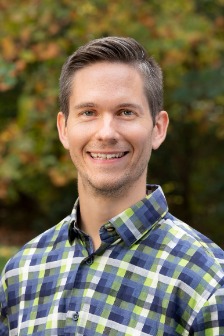
Dr. Trevor Nolan obtained his Ph.D. in Genetics and Genomics from Iowa State University in 2018 where he worked with Dr. Yanhai Yin to study how plants balance brassinosteroid-mediated growth and drought responses. He then joined Philip Benfey’s lab at Duke University as an NSF PGRP postdoc. His work leverages time-series single-cell RNA sequencing to unravel the interplay between cell identity and hormone signaling in Arabidopsis roots. In the future, he aims to elucidate the molecular intricacies of the switch from proliferation to differentiation and the orchestration of root growth, utilizing innovative techniques such as single-cell genomics, 3D spatial transcriptomics, and large-scale CRISPR screening.
Nathalie Aoun
Biography
(Awardee Profile)
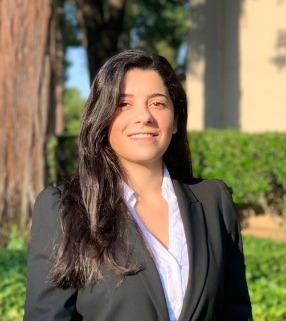
Dr. Nathalie Aoun is a postdoctoral scholar in the Plant Pathology Department at the University of California, Davis. Her current research investigates infection and colonization mechanisms of plant pathogenic Ralstonia in the lab of Dr. Tiffany Lowe-Power. Dr. Aoun obtained her Ph.D. in plants-microorganisms interactions at the Laboratory of Plant-Microbe Interactions of INRAE (Toulouse, France). Her Ph.D. work investigated the genetic basis of plant defense responses to Ralstonia under the impact of heat stress.
Hee-Kyung Ahn

Biography
Career Update: As of Fall 2024, Dr. Ahn has joined the University of Edinburgh as a Royal Society University Research Fellow in the Institute of Molecular Plant Sciences.
(Awardee Profile)
Dr. Hee-Kyung Ahn is a plant molecular biologist who wants to understand how the proteins work together in plant cells. Dr. Ahn studied protein translation and folding during her PhD. Now as postdoc, moved onto studying assembly of intracellular immune receptor protein complexes upon pathogen recognition in plants. She wants to build her independent research in the future to asking how these immune receptors are maintained and assembled in the plant cells.