
The Sahyadri Future Faculty Academy provides opportunities for six to eight postdoctoral researchers who are determined to shape the future of academia. Through structured workshop sessions and tailored support, participants will gain the skills and insights needed to effectively navigate their job searches and advance their careers.
Application submissions begin each fall—join us in fostering a brighter future for plant science!
2026 Future Faculty Academy
Anuradha Singh

Biography
Dr. Anuradha Singh is a plant scientist and researcher in the laboratory of Dr. Addie Thompson at Michigan State University. Her research focuses on understanding how crops respond to environmental stresses, particularly drought. She integrates plant physiology, genetics, genomics, and high-throughput phenotyping to uncover mechanisms underlying water-use efficiency, stress resilience, and yield stability in sorghum. She is passionate about translating fundamental plant science into practical strategies for developing climate-resilient crops and advancing sustainable agriculture. Her work bridges molecular mechanisms with field-level crop performance to address challenges posed by a changing climate.
Eajaz Ahmad Dar

Biography
Dr. Eajaz Dar is a postdoctoral researcher at the University of Florida specializing in nutrient management and sustainable cropping systems. His work focuses on advancing 4R nutrient stewardship—right source, rate, time, and place—to improve nutrient efficiency in row crops, particularly cotton and corn. He also evaluates winter cash cover crops and integrated crop–livestock options to enhance profitability and resilience in cotton–peanut rotations across the Southeastern United States. Through field‑based research and collaborative extension efforts, Dar aims to develop practical, science‑driven strategies that support farmers, strengthen soil health, and promote long‑term agricultural sustainability.
Janeen Braynen

Biography
Dr. Janeen Braynen is a postdoctoral scientist at Cold Spring Harbor Laboratory. Her research investigates how plants respond and adapt to changes in nutrient availability. Using large-scale gene regulatory networks, she aims to identify the regulatory mechanisms that enable plants to compensate for; or become disrupted by; nutrient stress. Dr. Braynen earned her PhD from Zhengzhou University in China, where she developed a passion for understanding how the organization of gene regulation creates biological robustness in plants.
Lekshmy V Sankarapillai

Biography
Dr. Lekshmy V. Sankarapillai is a plant physiologist and Postdoctoral Researcher at Mississippi State University whose research examines how climate extremes influence crop carbon balance, reproductive resilience, and productivity. Her work integrates diel physiology with functional phenotyping to understand carbon-use efficiency and reproductive responses under interacting environmental stresses. She earned her Ph.D. from the University of Agricultural Sciences, India, with support from the INSPIRE Fellowship, investigating the physiological, genetic, and molecular basis of acquired drought tolerance. Her long-term goal is to integrate physiology, phenotyping, and molecular approaches to develop climate-resilient crops while mentoring the next generation of plant scientists.
Payal Sanadhya

Biography
Dr. Payal Sanadhya earned a Ph.D. in Plant Biotechnology from the Academy of Scientific and Innovative Research (AcSIR), India, where she studied the molecular mechanisms of salt stress tolerance in the halophyte Aeluropus lagopoides. Following five years of postdoctoral research at the Agricultural Research Organization (ARO), Israel, investigating plant-nematode interactions and biological crop protection, she joined the Department of Entomology and Plant Pathology at the University of Arkansas in 2021. Payal’s research focuses on dissecting the molecular mechanisms underlying plant-nematode interactions and developing sustainable, environmentally friendly strategies to manage economically important plant-parasitic nematodes, including root-knot nematodes and soybean cyst nematodes.
Ritu Singh

Biography
Dr. Ritu Singh is a plant pathologist studying how fungal pathogens infect plants, adapt to diverse hosts, and overcome plant defenses. As a postdoctoral researcher at the University of California, Davis, she uses Botrytis cinerea to understand how a generalist pathogen infects diverse hosts and how hosts respond to infection. She earned her PhD from National Institute of Plant Genome Research, India, where she studied genetic and molecular mechanisms of resistance in chickpea-Ascochyta interactions. Her long-term goal is to build an interdisciplinary research program connecting pathogen evolution, plant immunity, and functional genomics to develop durable strategies for crop disease resistance.
Yana Kazachkova

Biography
Dr. Yana Kazachkova is an Associate Research Scholar at Princeton University, where she works on engineering algal carbon-concentrating mechanisms in plants. Before joining Princeton, she conducted postdoctoral research at the Weizmann Institute of Science on plant specialized metabolism and transport. She is broadly fascinated by plant metabolism, particularly how plants organize biochemical processes in space while avoiding self-toxicity. Outside the lab, she enjoys gardening, reading, exploring new places, and occasionally bringing her plant obsession home from work.
2025 Future Faculty Academy
Erika Moore-Pollard
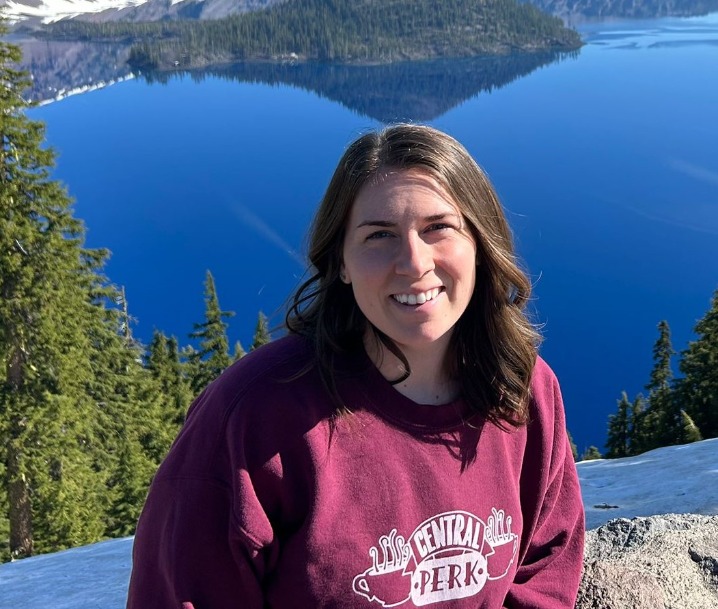
Biography
Dr. Erika Moore-Pollard is a postdoctoral researcher at the University of Connecticut. Her current research focuses on photosynthetic metabolism and functional trait tradeoffs in Bromeliaceae. She earned my PhD at the University of Memphis, where I investigated the phylogenomics, genomics, and systematics of Asteraceae, with a particular focus on the complex genus Packera. Dr. Moore-Pollard overall research goal is to uncover the molecular drivers of plant diversification, with an emphasis on how polyploidy, hybridization, and convergent evolution shape trait innovation and ecological success across angiosperms.
Rajnandani Kashyap

Biography
Dr. Rajnandani Kashyap is a Postdoctoral Fellow in the Department of Biochemistry & Molecular Biology at Saint Louis University, USA. She specializes in anaerobic structural biology, with expertise in cryo-EM, X-ray crystallography, and spectroscopy to investigate the mechanisms of long-range electron transfer enzymes. Her research focuses on Fe-S cluster carrying enzymes including nitrogenase, nitrogenase-like enzyme and mammalian enzymes, with broader implications for photosynthesis and genome stability. She has received multiple awards, including invited talks, travel and poster awards at national and international conferences, and has published in high-impact journals such as Nature Communications.
Arpita Yadav

Biography
Dr. Arpita Yadav is a plant molecular and cell biologist investigating the fundamental mechanisms of plant growth and development. As an Assistant Research Professor at Pennsylvania State University in the Cosgrove Lab, she currently studies plant cell wall mechanics and growth. Her previous postdoctoral work at the University of Massachusetts Amherst elucidated the relationship between cellulose microfibrils and anisotropic growth. Dr. Yadav earned her PhD in India, where she discovered key roles for BBX proteins in mediating photomorphogenesis and UV-B stress tolerance in Arabidopsis thaliana.
Kirk Amundson
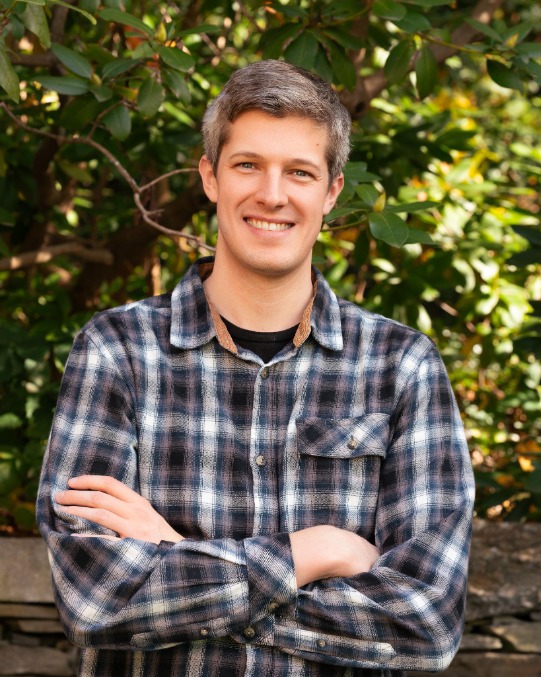
Biography
Dr. Kirk Amundson is currently a postdoctoral scholar and USDA NIFA Postdoctoral Fellow at the University of Massachusetts Amherst. His research aims to better understand cis-regualtory evolution in plants, with a focus on dissecting the molecular basis of evolutionary innovations in the grasses. He earned a PhD from the University of California Davis where he investigated how mutations accumulate throughout a plant over its lifetime, as well as the cytological basis of a genetic trick known as haploid induction.
2024 Future Faculty Academy
Ajeet Chaudhary

Biography
Dr. Ajeet Chaudhary is currently a postdoctoral researcher at the Carnegie Institute for Science and a visiting scholar in the Department of Genetics at Stanford University. He identifies as a plant development biologist. His research interests include understanding cell-to-cell coordination during tissue morphogenesis in various environmental conditions.
Hailong Yang

Biography
Career Update: Dr. Yang has joined the Sainsbury Laboratory as a Research Associate at the University of Cambridge.
(Academy Profile)
Dr. Hailong Yang has been involved in maize research since his undergraduate studies and is passionate about understanding how gene expression regulates growth and development in grass plants, particularly corn. His research has focused on floral development and transcriptional regulation by microRNAs in maize. In the Bartlett lab, he combines computational data analysis with CRISPR/Cas9 and molecular techniques to investigate how the expression of developmental genes are regulated and how these genes have evolved in grasses.
Katherine D’Amico-Willman

Biography
Dr. Katherine D’Amico-Willman is currently a postdoctoral scholar and former USDA NIFA Postdoctoral Fellow at North Carolina State University where her research focuses on the ecology and evolution of bacteriophages associated with plant pathogenic bacteria in peaches. She earned a PhD from Ohio State University as a USDA NIFA Predoctoral Fellow in Translational Plant Sciences where she investigated the molecular mechanisms underlying perennial plant aging and the development of aging-related disorders in almonds. Prior to this, Dr. D’Amico-Willman worked as a Molecular Biologist for the USDA ARS and earned a Master’s degree from the SUNY College of Environmental Science and Forestry working on the American Chestnut Research & Restoration Project.