Past Leadership Team Members

Asif Ali
Biography
Asif was born and grew up in Punjab, Pakistan. He is a Young Talent Researcher in Xianjun Wu’s Lab, Sichuan Agricultural University, Chengdu, China. His research focuses on the reproductive development of floral organs and fertility controlling genes. During his doctorate and postdoc, he cloned two novel genes, which are essential for spikelet and anther cuticle development in rice.
He is an Associate Editor of BMC Plant Biology and a reviewer of several peer-reviewed journals including the Journal of Experimental Botany. Asif also loves to teach scientific writing, basic molecular biology techniques, omics data interpretation and bioinformatics through Youtube tutorials.
Jaspreet Sandhu

Sandra Hoffberg
Biography
Sandra is an NSF Plant Genomics Postdoctoral Fellow at Columbia University in the Department of Ecology, Evolution, and Environmental Biology in the lab of Deren Eaton. Her research focuses on the phylogenetic relatedness of species in the genus Amaranthus and spread of herbicide resistance among agricultural weeds in this genus. As a graduate student at the University of Georgia, Sandra helped develop DNA library preparation methods for next generation sequencing, and she continues to lead annual workshops to teach bench protocols and reproducible data analysis to evolutionary biologists.
Sandra is an active member of the Genetics Society of America, where she is in the Early Career Leadership Program.

Allison Barnes
Biography
Allison grew up in Bennington, Nebraska, where 4-H fostered her interest in plant science and agriculture. She is currently an NSF PGRP post-doctoral fellow at North Carolina State University studying maize phospholipid metabolism adaptations to highland environments. Her research focuses on characterizing a phospholipase that is important for highland survival. Allison obtained her Ph.D. from the University of Nebraska-Lincoln where she studied how plants remodel their membranes in response to freezing stress. During the final year of her Ph.D., Allison was a USDA NIFA-AFRI Predoctoral Fellow.
In her free time, she enjoys spending time with her dogs, reading, and doing crafts like paint by number and sewing.
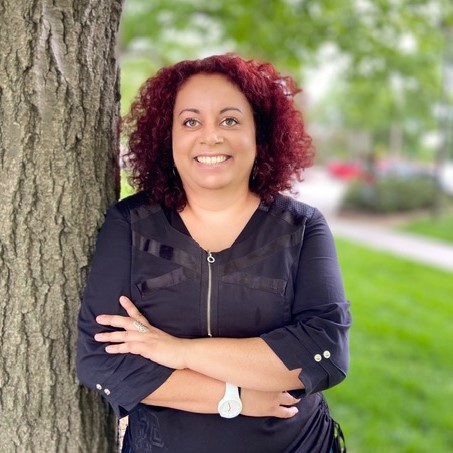
Lise Pingault
Biography
Lise is currently a postdoc at the University of Nebraska-Lincoln in the lab of Dr. Joe Louis. Her research focuses on insect-plant interactions with the identification of key genes, signaling networks, metabolites, and regulatory mechanisms involved in plant resistance to insect pests. She enjoys outreach events with lab members. In her spare time, she likes singing, baking, biking, and traveling.

Pan Liao
Biography
Pan Liao is currently a postdoc in the Department of Biochemistry at Purdue University. He is investigating how volatiles from petunia flowers released from cells into the environment and discovering genes for the biosynthesis of valuable specialized metabolites from medicinally plants. His research interests include plant biotechnology, biochemistry, secondary metabolism, lipid metabolism, pathway discovery and pathway “crosstalk”. His long-term research plan is to go on discovering novel genes and pathways responsible for the biosynthesis of medicinal valuable compounds, provide novel strategies to produce them or increase their production in different organism systems, eventually provide support for the health of human beings. Pan is currently a leadership member of the Plant Postdocs, his major role as Global communication lead is to extend impact of (or introduce) Plant Postdocs to peers located in other countries. Pan is also an ambassador at the Purdue Center for Plant Biology (CPB) and a council member of the Purdue Postdoctoral Association (PPDA). If you are interested in his research, please follow him at @PanLiao1.
Past Advisory Board Members
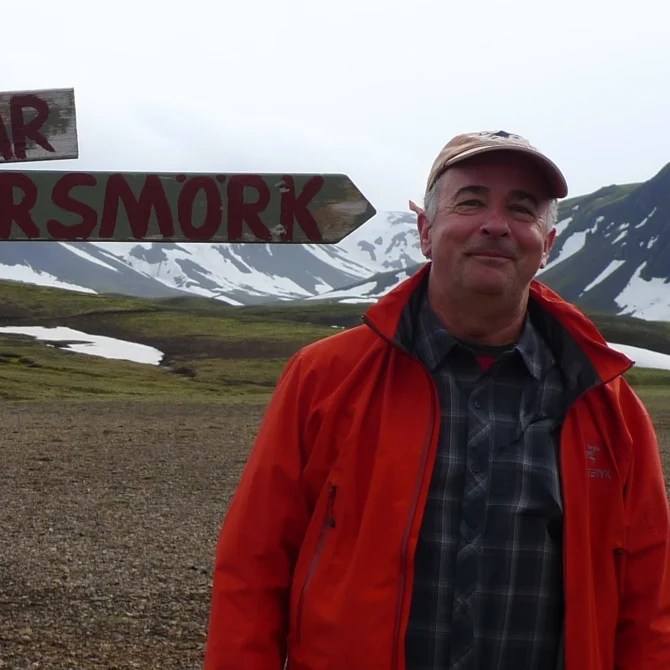
Robert Last
Biography
Robert Last is Barnett Rosenberg Professor of Plant Biochemistry at Michigan State University and recently served as President of the American Society of Plant Biologists. His long-term research interest is understanding how higher plants use metabolism to adapt to environmental factors, and how primary consumers of plant foods – including humans – benefit from these metabolic strategies. Until recently his research was entirely focused on using genetically tractable ‘model organisms’, but his lab now takes advantage of genomics technologies to study the enormous range of metabolic strategies that plants have evolved over tens and hundreds of millions of years.

Gabriela Auge
Biography
Gabriela Auge is a group leader at the Institute of Biosciences, Biotechnology and Translational Biology of the University of Buenos Aires. In her lab, they study how plants pass information from one generation to the other to understand how they adjust their life cycles to seasonal changes, investigating the underlying molecular mechanisms and exploring the consequences of transgenerational environmental effects at ecological and evolutionary levels. Gabriela is also a Lecturer of Plant Physiology at the National University of Quilmes and coordinator of the Argentinian Women in Plant Biology and Argentinian Seed Biology Networks.

Arjun Krishnan
Biography
Arjun Krishnan is an Assistant Professor at Michigan State University and is a part of two departments: Dept. Computational Math, Science & Engineering and Dept. Biochemistry & Molecular Biology. His team works broadly in the areas of computational genomics and biomedical data science. Before coming to MSU, Arjun completed his bachelor degree in Biotechnology in India before moving to the US for his PhD in Computational Biology at Virginia Tech. Following that, he completed his postdoctoral research at Princeton University.
 Plant Postdocs